 FeaturedVeinteañera, divorciada y fantástica2020 · Comedy · ★ 8.0Details
bCine: Spanish-language films, from Elsa & Fred, Moon of Avellaneda and Seventeen to Cousinhood, School for Tramps, Whisky and Lullaby, and where to watch them
162 films from Spain, Mexico, Argentina and their neighbours, 1951 to 2026, chosen for the whole household.
Top Trending
View all ›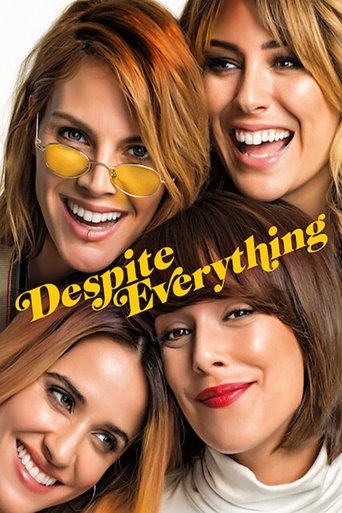 ★ 6.0
★ 6.0 ★ 6.4
★ 6.4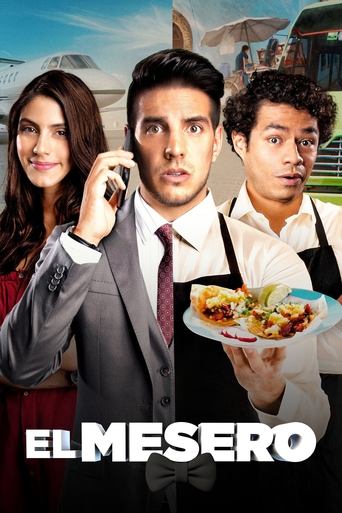 ★ 8.0
★ 8.0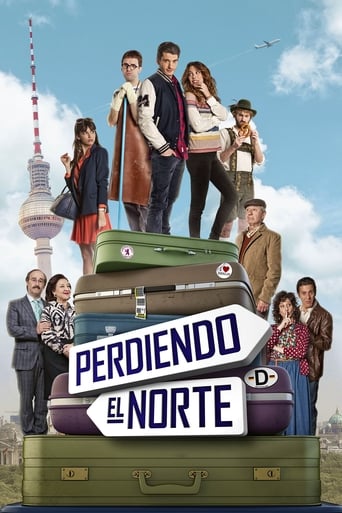 ★ 6.3
★ 6.3 ★ 5.8
★ 5.8 ★ 5.6
★ 5.6 ★ 6.0
★ 6.0Watch now from Spain
View all › ★ 6.4
★ 6.4 ★ 6.3
★ 6.3 ★ 6.2
★ 6.2 ★ 6.3
★ 6.3 ★ 6.0
★ 6.0 ★ 5.9
★ 5.9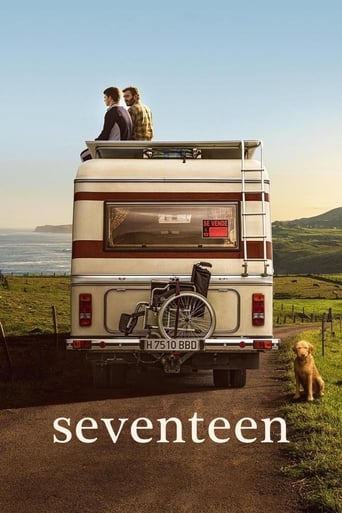 ★ 7.3
★ 7.3Watch now from Mexico
View all › ★ 8.4
★ 8.4 ★ 7.8
★ 7.8 ★ 7.4
★ 7.4 ★ 6.8
★ 6.8 ★ 7.0
★ 7.0 ★ 8.3
★ 8.3 ★ 6.4
★ 6.4Argentina and the south
View all › ★ 6.8
★ 6.8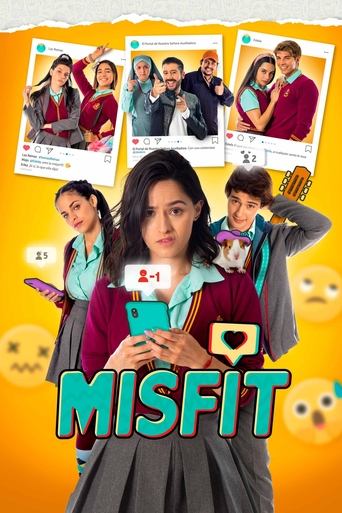 ★ 8.0
★ 8.0 ★ 6.4
★ 6.4 ★ 7.2
★ 7.2 ★ 8.6
★ 8.6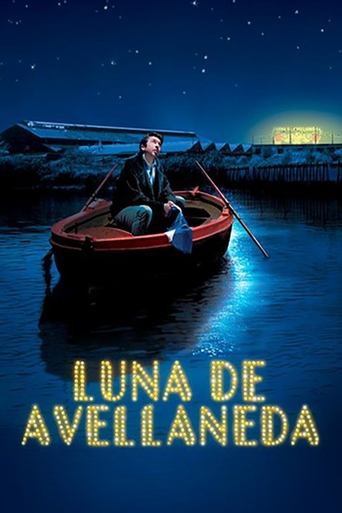 ★ 7.2
★ 7.2 ★ 6.9
★ 6.9Top Rated
View all ›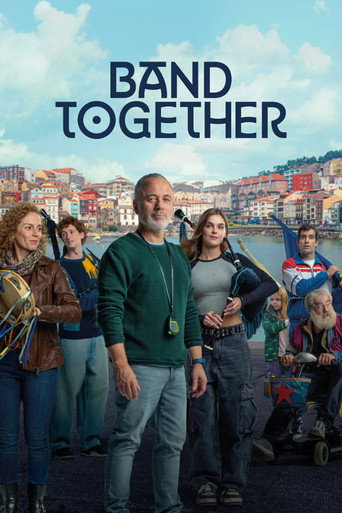 ★ 7.4
★ 7.4 ★ 8.5
★ 8.5 ★ 8.4
★ 8.4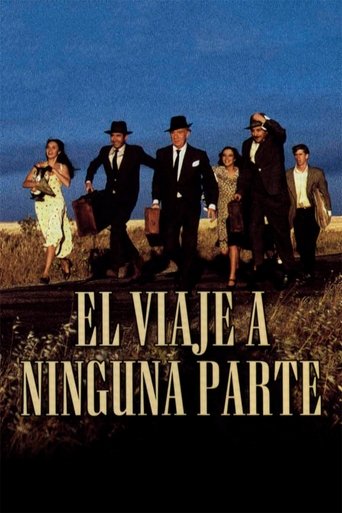 ★ 7.5
★ 7.5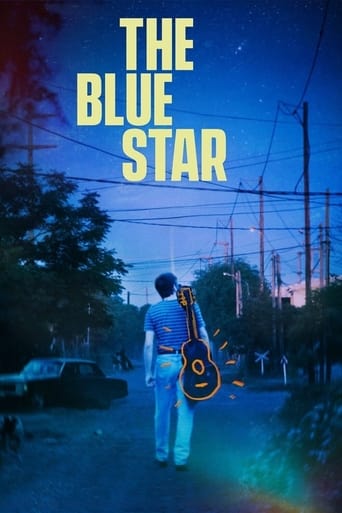 ★ 7.4
★ 7.4 ★ 7.5
★ 7.5 ★ 7.7
★ 7.7Family stories
View all › ★ 6.3
★ 6.3 ★ 5.9
★ 5.9 ★ 6.2
★ 6.2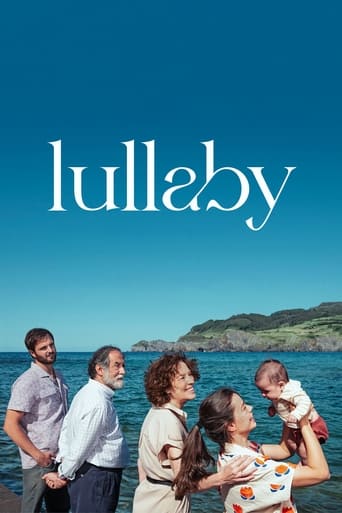 ★ 7.2
★ 7.2 ★ 5.9
★ 5.9 ★ 7.6
★ 7.6 ★ 5.5
★ 5.5Spanish-language films for the whole household: the bCine guide
bCine: Spanish-language films, from Elsa & Fred, Moon of Avellaneda and Seventeen to Cousinhood, School for Tramps, Whisky and Lullaby
Spanish is the first language of some five hundred million people, and it is spoken across twenty countries on two sides of an ocean. That spread gives its cinema an unusual range. A comedy from Madrid, a musical from the golden age of Mexico City, a road film from Patagonia and a quiet story from a sock factory in Montevideo share a language and very little else, and a viewer who learns to move between them gains four or five film cultures for the price of one. bCine is a guide to 162 of these films, made between 1951 and 2026. Each has its own page, its story, its director and cast, and a Watch now button that leads to the official services carrying it in your country.
The catalogue has been chosen for the whole household. Every film was read through by hand, and the selection favours comedies, love stories, family dramas, journeys and the gentler classics. Crime thrillers, horror, films of the battlefield and titles made strictly for adults were left out. What remains is a cinema of weddings and reunions, of villages and neighbourhoods, of grandparents who refuse to slow down and grown children who come home for a weekend and stay for the summer. It is a warm, talkative, generous body of work, and it rewards anyone who gives it an evening.
The numbers give a first idea of the shape. Eighty-five of the films have Spain among their makers, fifty-five have Mexico, and thirty-seven come from Argentina, Uruguay, Chile, Colombia, Cuba, Peru, Venezuela, Ecuador, Costa Rica or the Dominican Republic; several are co-productions and belong to two lists at once. One hundred and thirty-one are comedies of one kind or another, fifty-six are dramas, thirty-eight are romances, and nineteen are built around music. Twelve were made before 2000, and one hundred and thirteen have appeared since 2016, so the collection leans towards the present while keeping a firm hold on the past.
A first-time visitor can begin with any of seven films. Elsa & Fred is a late love story set in Madrid with two of the best-loved actors of Argentina and Spain. Moon of Avellaneda follows the members of a neighbourhood club in Buenos Aires as they try to save it. Seventeen sends two brothers and their grandmother along the coast of Cantabria in a camper van in search of a dog. Cousinhood returns three cousins to the seaside village of their childhood summers. School for Tramps is a Mexican screwball comedy of 1955 with Pedro Infante. Whisky is a small Uruguayan film of great tenderness, and Lullaby is a recent Spanish drama about a new mother and her own parents. Between them they cover three countries, seven decades and most of the moods the catalogue has to offer.
How the collection is arranged
bCine keeps its header as a floating row of rounded pills. The first holds the logo and the menu: Browse opens the full catalogue with the most popular films first, Spain, Mexico and Argentina open the three regional lists, Top rated opens the forty-three films with the strongest scores, and A-Z lists everything alphabetically. The second holds Search and the Watchlist. Under the header the home page shows one featured film as a wide rounded still, and then a series of rows that scroll sideways: Top Trending, Watch now from Spain, Watch now from Mexico, Argentina and the south, Top Rated and Family stories. Each row ends in a View all link.
The lists beyond the menu are reached from the Collections page. Comedy, Romance and Drama sort the films by kind. Family gathers sixty films about parents, children, siblings and grandparents. Weddings holds twenty-six films in which somebody is about to marry, has just married or has decided against it. Journeys collects fifty-one road trips, holidays and village stories, Music has nineteen films with singers, bands and mariachis, and The fantastic keeps twelve tales of robots, time travel and wonders. Six further lists divide the catalogue by year.
Every film page follows one pattern. The poster stands beside the title, the year, the running time and the score; the story follows in a paragraph; the director and the leading cast are named; and the Watch now button sits under a country selector. Choose your country once and the site remembers it. Press the button and JustWatch opens with the subscription, rental, purchase and free services that carry the film where you live.
Spain: the comedy of the big cast
Spanish popular comedy is a team sport. Its favourite form gathers eight or ten well-known faces around a single occasion, a wedding, a holiday, a family lunch, a meeting of neighbours, and lets them talk across each other until the truth comes out. The actors move from film to film, so that a viewer who has seen three or four of these comedies begins to greet the cast as old friends: Carmen Machi, Javier Cámara, Javier Gutiérrez, Quim Gutiérrez, Julián López, Blanca Suárez, Alexandra Jiménez, Jordi Sánchez and Roberto Álamo appear here again and again, often together.
The best place to start is with Daniel Sánchez Arévalo, who has four films in the catalogue. Cousinhood (2011) begins with a groom left alone on his wedding day; his two cousins bundle him into a car and drive to the village on the Cantabrian coast where the three spent their boyhood summers, in the hope that his first love is still there. Family United (2013) sets the wedding of the youngest of five brothers on the afternoon of the 2010 World Cup final, so that every guest has one eye on the ceremony and one on the match. Seventeen (2019) is quieter and better still: a boy who has grown attached to a rescue dog sets off to find it, and his older brother and their grandmother come along in a camper van. Band Together (2025) moves to a fishing town in Galicia, where the members of a rondalla, a street orchestra of guitars and mandolins, take up their instruments again two years after a loss at sea. All four are generous to every character, and all four end with the family larger than it began.
The single-occasion comedy has many other good examples. All in Favor (2025) takes place almost entirely in one flat in central Madrid, where a meeting of neighbours called to vote on a new lift turns to a quite different question. 53 Sundays (2026), directed by Cesc Gay, brings together Javier Cámara, Carmen Machi and Javier Gutiérrez as three siblings who meet to decide what to do about their elderly father and find thirty years of small grievances on the table. It's for Your Own Good (2017) joins Cámara, Jose Coronado and Roberto Álamo as three brothers-in-law who unite against their daughters' boyfriends. Lord, Give Me Patience (2017) sends a stern father and his very different grown children to the coast of Andalusia to honour his wife's last wish. I Hate Summer (2024) lodges three families in one holiday house in the Canary Islands after a booking mistake, and Four's a Crowd (2022), directed by Álex de la Iglesia, fills a shared car from Bilbao to Madrid with four passengers and one secret.
A second strand follows young Spaniards who leave home to look for work. Off Course (2015), directed by Nacho G. Velilla, sends two graduates to Berlin, where their degrees earn them jobs in a kebab restaurant and a place in a community of emigrants a generation older; it was one of the largest Spanish hits of its year and has a sequel here, Off Course to China (2019). Crossing Borders (2006), written and directed by Carlos Iglesias from his own childhood, tells the same story half a century earlier: two men from Madrid take the train to Switzerland in 1960 to work in a factory and discover a country of clean rivers and punctual trains. Watched together the two films make a small history of Spanish emigration, and both are very funny.
Carmen Machi deserves a paragraph of her own, since seven films in the catalogue depend on her. In The Tribe (2018) she is a cleaner who dances in a street-dance group of mothers and takes in the son she gave up for adoption, played by Paco León. In Thi Mai (2018) she travels to Vietnam with two friends to complete an adoption her daughter had begun. In Honeymoon with My Mother (2022) she accompanies her jilted son to Mauritius on the trip that was already paid for, and has a far better time than he does. Tomorrow Is Today (2022) sends her and Javier Gutiérrez from a beach in 1991 to the present day, and A Remarkable Tale (2019) casts her as the leader of a mountain village that welcomes unexpected newcomers.
Other comedies of recent years are worth knowing. Superlopez (2018) adapts a much-loved Spanish comic strip about an office worker from another planet, with Dani Rovira in the cape. Two Many Chefs (2022) pairs Karra Elejalde and Enric Auquer as a father and son in the kitchens of Bilbao. Matusalén (2024) follows a rapper in his forties who enrols at university to win a bet with his father. The Footballest (2018), from the children's books by Roberto Santiago, is a school football mystery for younger viewers, and Live Is Life (2022) follows five boys through the Galician summer of 1985 on a quest for a magic flower.
Spain: quieter films
Beside the big comedies Spain makes a cinema of small rooms and close observation. Lullaby (2022), the first feature by Alauda Ruiz de Azúa, is the outstanding recent example. Amaia has just had a baby; her partner is away for work, and she goes to stay with her parents in their flat on the Basque coast. Over a few months she comes to see her mother and father as people with a marriage and a history of their own. Laia Costa and Susi Sánchez play daughter and mother with great truthfulness, and the film won the leading Spanish prizes of its year, among them the Goya awards for best new director, best actress and best supporting actress. The same director's Love at First Kiss (2023) is a light romantic comedy about a man who sees the whole future of a romance at the first kiss.
Rosa's Wedding (2020), directed by Icíar Bollaín, belongs between the two modes. Rosa, played by Candela Peña, is a seamstress nearing forty-five who has spent her life looking after her father, her brother, her sister and her daughter. She decides to reopen her mother's old dressmaking shop in a seaside town and to mark the change with a ceremony in which she marries herself. Her family, naturally, hears only the word wedding and begins to organise. It is a comedy with a serious centre, and Peña is a joy in it.
10,000 Km (2014) uses only two actors, Natalia Tena and David Verdaguer, and two flats, one in Barcelona and one in Los Angeles. A couple separated by a year of work try to keep their love alive through screens, and the film watches patiently as the distance does its work. The Other Way Around (2024), directed by Jonás Trueba, begins where most love stories end: after fifteen years together a couple decide to part and to celebrate the decision with a party, as her father once suggested, and they spend the film inviting their puzzled friends. In the City of Sylvia (2007), by José Luis Guerín, follows a young man through the streets and café terraces of Strasbourg as he looks for a woman he met six years before; it has very little dialogue and is one of the most beautiful films about looking ever made.
The 4th Floor (2003), directed by Antonio Mercero from a play by Albert Espinosa based on his own youth, is set on the children's ward of a hospital, where a gang of teenage patients race their wheelchairs along the corridors at night. It is funny, brave and suitable for older children. Mediterraneo: The Law of the Sea (2021) tells the true story of two lifeguards from Badalona who travelled to the Greek island of Lesbos in 2015 to help people arriving by boat, and founded a rescue organisation; it is a serious film, best watched with teenagers and adults. The Portuguese House (2025) follows a quiet geography teacher who begins a new life as a gardener on a country estate in Portugal, and The Broken Crown (2016) is a historical drama about Queen Juana of Castile and the men who ruled in her name.
Spanish fantasy has a corner of its own. The Miracle of P. Tinto (1998), the first feature by Javier Fesser, is a comic fable about a couple who run a communion-wafer factory beside a railway line and long for a child; its humour is entirely its own, and Fesser returned to the same vein with the four linked tales of Historias lamentables (2021). EVA (2011), by Kike Maíllo, is set in 2041 in a snowy university town where an engineer played by Daniel Brühl returns to build a child robot and takes his young niece as the model. Extraterrestrial (2011), by Nacho Vigalondo, is a comedy for four characters in a Madrid flat on the morning a vast spacecraft appears over the city, and the same director's short 7:35 in the Morning (2003), nominated for an Academy Award, turns a café breakfast into a musical number. Some Time Later (2018) was the last film of the veteran José Luis Cuerda, a comic vision of the year 9177.
Mexico: the golden age
From the middle of the 1930s to the end of the 1950s Mexico City was the film capital of the Spanish-speaking world. Its studios made more than a hundred features a year and sent them to every country from Spain to Argentina, and its stars were known to audiences who had heard of very few Hollywood names. bCine keeps five films from that tradition and its afterglow, and they are among the most enjoyable in the catalogue.
Pedro Infante was the best loved of all the stars. He was a carpenter from Sinaloa who became a singer of rancheras and then an actor of remarkable ease, equally at home in comedy and in melodrama, and he made some sixty films before his early death in 1957. Three are here. School for Tramps (1955) is a screwball comedy in the Hollywood manner: a famous composer whose car has broken down knocks at the door of a grand house to use the telephone and is taken for one of the vagabonds whom the kindly lady of the family likes to adopt, and he stays on as chauffeur because he has seen the daughter, played by Miroslava. It was one of the great successes of Mexican cinema and still plays beautifully. ¿Qué te ha dado esa mujer? (1951), directed by Ismael Rodríguez, teams Infante with Luis Aguilar as two motorcycle policemen whose friendship is tested when each falls in love, and Los hijos de María Morales (1952), directed by Fernando de Fuentes, pairs him with Antonio Badú as two singing brothers who meet their match in two sisters.
Mario Moreno, known everywhere as Cantinflas, was the great comedian of the same years. His character, a poor man of the city who talks his way out of every difficulty in sentences that circle endlessly and arrive at their starting point, gave the Spanish language a verb, cantinflear. Entrega Inmediata (1963) makes him a postman recruited by accident as a secret agent. Don Quixote Rides Again (1973), a co-production with Spain directed by Roberto Gavaldón, casts him as Sancho Panza beside the Don Quixote of Fernando Fernán Gómez, and puts the old knight on trial with his squire as chief witness.
The musical tradition continued long after the studios declined. Mi Querido Viejo (1991) stars Vicente Fernández, the leading ranchera singer of his generation, beside his son Alejandro, as a father and son who are both musicians and who find it easier to sing to each other than to speak. The Last One and then We Go (2015) follows a group of elderly mariachis from a small town who are invited to a national contest in Mexico City and set off by any transport they can find; it is one of the warmest films on the Mexican list and is suitable for all ages.
Mexico today
Mexico now has one of the largest cinema audiences in the world, and its home-grown successes are almost all comedies. Many are romantic comedies with a heroine at a turning point. Cindy La Regia (2020), from a popular comic strip, follows a wealthy young woman from Monterrey who turns down a proposal and runs away to Mexico City, where she has to earn a living for the first time. Thirty Something, Single and Fabulous (2016) stars Bárbara Mori as a writer who starts again after a seven-year relationship ends, and Veinteañera, divorciada y fantástica (2020) follows its heroine, played by Paulina Goto, through the year after a very short marriage. Ready to Mingle (2019) enrols its heroine in a course for women who wish to find a husband, and Crazy About Work (2018) takes an executive who has lost her job and sets her to rebuilding her life from the kitchen table.
A second group borrows a proven story and gives it a Mexican setting. When I'm Young (2022) brings Verónica Castro back to the screen as a grandmother of seventy who is magically returned to the age of twenty-two and joins her grandson's band. 3 Idiotas (2017) retells a celebrated Indian comedy about three university friends, As If It Were the First Time (2019) is about a man who courts a woman whose memory resets every morning, and Dad or Mom (2023) follows a divorcing couple who both receive the promotion of their dreams. Our Times (2025) sends a pair of married scientists, played by Lucero and Benny Ibarra, from 1966 to 2025, where she discovers that the world now listens to her, and With You in the Future (2025) uses time travel to give a couple on the edge of divorce a second look at each other.
Family comedies form a third group. The Marquez-Castillo Siblings (2019) sets four siblings to compete for an inheritance, and All the Places (2023) reunites a brother and sister after fifteen years for the motorcycle journey they planned as children. Dust To Dust (2000) sends two cousins by car to Acapulco with their grandfather's ashes, and One for the Road (2015) follows three men in their eighties on a journey to keep a promise to a friend. Mom Went On Vacation (2019) leaves a father in charge of four children, Lady Rancho (2019) sends a spoiled city girl to work on the family ranch for a summer, and El mesero (2021) stars Vadhir Derbez as a waiter with large ambitions.
Mexico also makes quieter films of real distinction. The Chambermaid (2019), the first feature by Lila Avilés, stays for its whole length inside a luxury hotel in Mexico City with Eve, a young woman who cleans the rooms on the twenty-first floor and studies in her breaks. The Wolves (2020), by Samuel Kishi, follows two small brothers who have just arrived in the United States with their mother and spend their days in a single room, drawing on the walls and waiting for the trip to Disneyland she has promised. The Good Girls (2019) observes a wealthy circle of friends during the economic crisis of 1982, and A Wonderful World (2006), by Luis Estrada, is a satirical fairy tale with Damián Alcázar. Corina (2025) is a gentle comedy about a shy young woman from Guadalajara who works at a publishing house and has to leave her neighbourhood for the first time.
Argentina
Argentine cinema is a cinema of talk. Its characters argue, confess, joke and reason at a speed that subtitles can barely follow, and its best films trust conversation to carry a story. Buenos Aires, a city of bookshops, cafés and psychoanalysts, is the usual setting, and the leading actors, above all Ricardo Darín, are admired across the Spanish-speaking world.
Moon of Avellaneda (2004), directed by Juan José Campanella, is the natural first choice. Luna de Avellaneda is a social and sports club in a working district of Buenos Aires, founded in the 1940s, where generations have danced, played basketball and held their wedding parties. By 2004 it is deep in debt, and a buyer offers to turn it into a casino. Darín plays a man who was born at one of the club's dances and has given it his whole life, and the film follows the members as they debate what a neighbourhood owes its past. It is funny, sad and stirring, and it explains a great deal about Argentina. Darín appears again with Mercedes Morán in An Unexpected Love (2018), about a couple married for twenty-five years who wonder what to do with themselves once their son leaves for university.
Elsa & Fred (2005), directed by Marcos Carnevale and filmed in Madrid, is among the most loved films in the catalogue. Fred, played by the Spanish veteran Manuel Alexandre, is a careful widower of seventy-seven who has just moved into a new flat. Elsa, played by the great China Zorrilla, lives across the landing; she is a little older, tells splendid lies and has dreamed all her life of standing in the Trevi Fountain like the heroine of an Italian film she adores. The story of how she teaches him to enjoy himself was later remade in English, and the original remains the one to see. Carnevale also directed All Hail (2022), with Guillermo Francella as a celebrated television weatherman whose forecast goes wrong on the night of a hailstorm.
The comedy of marriage is an Argentine speciality. A Boyfriend for My Wife (2008) stars Adrián Suar as a husband too timid to say that he is unhappy and Valeria Bertuccelli as his gloriously bad-tempered wife; it has been remade in several countries. Suar directs and stars in 30 Nights with My Ex (2022), The Marriage App (2022) gives a tired couple a device that awards points for kindness, and Dad must be crazy! (2005) is a Francella holiday comedy. Today We Fix the World (2022), by Ariel Winograd, pairs Leonardo Sbaraglia with a nine-year-old boy in a search across Buenos Aires, and 27 Nights (2025), directed by Daniel Hendler, turns on an expert who must decide whether a spirited elderly woman is as free as she feels.
A more reserved school of film-making grew up in the late 1990s. Silvia Prieto (1999), by Martín Rejtman, is a deadpan comedy about a woman who decides on her twenty-seventh birthday to change her life and then meets another woman with her name. Lost Embrace (2004), by Daniel Burman, is set in a small shopping arcade in the Once district, where a young man played by Daniel Hendler waits among the shopkeepers for news of the father he has yet to meet; Hendler won the best actor prize at the Berlin festival. Intimate Stories (2002), by Carlos Sorín, follows three travellers along one road in Patagonia: an old man looking for his dog, a salesman carrying a birthday cake, and a young mother who has won a place on a television game show. Las acacias (2011), winner of the first-film prize at Cannes, puts a lorry driver, a woman and her baby daughter in one cab for the long drive from Paraguay to Buenos Aires and lets the three of them slowly become company. Puan (2023) is a comedy of rivalry in the philosophy faculty of the University of Buenos Aires.
Two Argentine films stand apart as fantasies. The Aerial (2007), by Esteban Sapir, is made in the manner of a silent film of the 1920s: a whole city has lost its voice, words float in the air as printed letters, and a family sets out to rescue the one singer who can still be heard. Moebius (1996), made by a teacher and his film students, imagines an underground train that vanishes into the tunnels of the Buenos Aires metro and the young mathematician sent to find it. The Blue Star (2024), a co-production with Spain, tells the true story of a rock singer from Zaragoza who travelled to the north of Argentina in the 1990s and learned its folk music from an old master.
Uruguay, Chile, Colombia, Cuba and their neighbours
The smaller film industries of Latin America release few features each year, and those that travel abroad tend to be the best of them. Whisky (2004), from Uruguay, is the finest example on bCine. Jacobo owns a small, ageing sock factory in Montevideo; Marta has worked for him for years, and the two exchange the same few words every morning. When Jacobo's more successful brother announces a visit from Brazil, Jacobo asks Marta to pose as his wife for a few days. The film that follows is almost wordless, very funny and unexpectedly moving, and its title is the word that Uruguayans say to the camera when a photograph is taken. It won a prize at Cannes and is often named the best film its country has produced. The Pope's Toilet (2007), also from Uruguay, is set in a border town where a visit from the Pope is expected to draw huge crowds, and a man who earns his living carrying goods by bicycle decides to build a pay lavatory for the visitors.
Chile is represented by The Movie Teller (2023), directed by the Danish film-maker Lone Scherfig and set in a mining town in the Atacama Desert in the 1960s. The family of María Margarita can afford one cinema ticket a week, so the child with the best gift for storytelling is sent to see the film and act it out for the others, and soon the whole town comes to listen. From Colombia comes Land and Shade (2015), winner of the first-film prize at Cannes, in which an old farmer returns to the house among the sugar-cane fields that he left years before, to care for his son and to meet his grandson. Memoria (2021), filmed in Bogotá and the mountains by the Thai director Apichatpong Weerasethakul with Tilda Swinton, is a slow, strange and beautiful film about a woman who hears a sound that others miss; it shared the Jury Prize at Cannes and suits patient viewers. Tomorrow Before After (2023) follows a young woman and a dog across an empty Colombian landscape.
Cuba contributes two films about music and vocation. Havana Blues (2005), directed by Benito Zambrano, follows two friends who lead a band in Havana and are offered a recording contract abroad that would take them away from home. A Translator (2019) is based on the directors' own father, a professor of Russian literature at the University of Havana who was sent in 1989 to interpret for children brought from the Soviet Union for medical treatment; Rodrigo Santoro plays him with great restraint.
The remaining countries each send one popular comedy, and together they make a pleasant tour. How to Get Over a Breakup (2018), from Peru, follows a young copywriter in Lima who starts a blog about single life and finds a second career. Papita, maní, tostón (2013), from Venezuela, is a romance between supporters of the two great rival baseball clubs of Caracas and Valencia, and was the most successful film in its country's history when it appeared. Colao (2017), from the Dominican Republic, brings a coffee grower of forty down from the hills to the capital in search of a wife. Misfit (2021), from Ecuador, is a school comedy about a popular girl who moves from the United States to Quito, and One Step from Me (2021), from Costa Rica, sends a journalist on a walking adventure through the national parks of her own country.
Weddings and other gatherings
Twenty-six films in the catalogue turn on a wedding, which makes it the most popular single event on bCine. The appeal is easy to see. A wedding gathers every branch of two families in one place, in their best clothes, with a timetable that is bound to slip, and a comedy needs little more. Three Many Weddings (2013) invites its heroine, a young university researcher, to the weddings of three former boyfriends in a single month. The Wedding Unplanner (2020) follows an organiser of weddings who causes one to be called off and is then asked to arrange it. Rosa's Wedding and Family United, described above, are the best of the Spanish examples.
Mexico answers with Wedding Registry (2025), in which two friends announce a marriage in order to share the presents, Hasta que la boda nos separe (2018), where two families with different ideas take over a couple's plans for a ceremony on the beach, Valentina's Wedding (2018), about a bride who has to introduce her American fiancé to her formidable political family, and Left High And Dry (2019), in which two cousins take a jilted groom to the beach of their childhood. Get Married If You Can (2014), written by its star Martha Higareda, sends one sister into the jungle and the other into an unexpected romance, and Bendita Suegra (2023) concerns a vet, her fiancé and his mother. Anyone But Her (2024) asks what a close group of friends should do when one of them announces an engagement the others doubt.
Journeys and villages
Spanish-language cinema loves a journey, and the fifty-one films in Journeys cover a good part of the map. 4L (2019) puts Jean Reno and Hovik Keuchkerian in an old Renault 4 and sends them from Spain across the Sahara towards Timbuktu to find a friend of their youth. Al final del camino (2009) walks the pilgrim road to Santiago de Compostela with a photographer and a journalist who have to pretend to be a couple. Descarrilados (2021) sends three friends in their forties on the rail tour of Europe that they first attempted at twenty, and Carpoolers (2021) shares one car between four strangers from Madrid to the coast. Por los pelos (2022) follows three men to Turkey in search of new hair, and Yucatán (2018) takes place aboard a cruise ship crossing the Atlantic from Barcelona to Mexico.
The village is the other great destination. In A Hipster in Rural Spain (2024) a young man from the city is sent to a hamlet in Teruel with a plan to revive it and learns that the villagers have plans of their own. The Little Switzerland (2019) concerns a Castilian town surrounded by the Basque Country that discovers a surprising link with Switzerland. Old Man Made in Spain (1969) reverses the direction: Paco Martínez Soria, the great comic actor of his day, plays a shepherd from the Pyrenees who comes down to Madrid to visit his three married daughters and finds the modern city very odd indeed. Go Team! (2026) strands the staff of a cheese company in a tiny village for a team-building weekend.
Three older Spanish films complete the picture. Voyage to Nowhere (1986), written and directed by Fernando Fernán Gómez and acted by him with José Sacristán, follows a family of travelling players from town to town across Castile in the years when cinema was taking away their audience. It is the great Spanish film about the theatre, and it won the first Goya award for best film. Main Street (1956), by Juan Antonio Bardem, is set in a small provincial town where an unmarried woman of thirty-five, played by the American actress Betsy Blair, becomes the object of a joke by the idle young men of the casino; it is a sad and compassionate classic for older viewers. The Great Vazquez (2010) stars Santiago Segura as the comic-strip artist Manuel Vázquez, who delighted the children of 1960s Barcelona and dodged his creditors with equal invention.
Faces to follow
One of the pleasures of a national cinema is learning its faces, and bCine makes it simple to follow an actor from page to page. Ricardo Darín is the best known Argentine actor of his time, a master of the weary, decent, quick-witted man; begin with Moon of Avellaneda and go on to An Unexpected Love. Guillermo Francella is the country's favourite comedian, seen here in All Hail and Dad must be crazy!. Valeria Bertuccelli is unforgettable in A Boyfriend for My Wife and appears also in The Aerial and Silvia Prieto, and Daniel Hendler acts in Lost Embrace and directs 27 Nights. Leonardo Sbaraglia is in Today We Fix the World and Puan.
In Spain, Javier Cámara can be seen in It's for Your Own Good, 53 Sundays and The Unexpected Love, in which he plays a Spanish actor getting by in New York. Javier Gutiérrez is in Band Together, Tomorrow Is Today, Crossing Borders and Al final del camino. Quim Gutiérrez leads Cousinhood, I Love You, Stupid and Honeymoon with My Mother, Julián López is in Off Course, Superlopez and Matusalén, and Blanca Suárez appears in Despite Everything, Four's a Crowd and The Te$t. Maribel Verdú stars in Empowered, in which a woman who has always been too polite begins to say exactly what she thinks, and Daniel Brühl, who grew up between Germany and Spain, is in EVA and The Movie Teller.
The Mexican list has its own regulars. Martha Higareda writes and stars in Get Married If You Can and leads 3 Idiotas. Vadhir Derbez, of a famous acting family, is in El mesero and As If It Were the First Time, and his brother José Eduardo is in Wedding Registry. Cassandra Sánchez Navarro plays the title part in Cindy La Regia and returns in Anyone But Her. Mauricio Ochmann is in Dad or Mom and All the Places, Michel Brown in With You in the Future and The Dad Quest, and Luis Gerardo Méndez co-directs and stars in Technoboys, a comedy about a boy band that reunites twenty years on.
Directors can be followed in the same way. Daniel Sánchez Arévalo has four films here and Nacho G. Velilla three. One Mexican director made four of the comedies here, among them The Last One and then We Go and Unhappily Ever After, and Pedro Pablo Ibarra made All the Places, El que busca, encuentra and Heaven In Your Eyes. Marcos Carnevale, Ariel Winograd, Javier Fesser, Nacho Vigalondo and Alauda Ruiz de Azúa each have two. Every film page names its director, so a film you enjoyed can lead you to the next.
Music
Nineteen films are built around music, and they show how many kinds of song the Spanish language holds. The Mexican ranchera, with its trumpets and its heartfelt verses, runs from the Pedro Infante films of the 1950s through Mi Querido Viejo to the old mariachis of The Last One and then We Go. Heaven In Your Eyes (2012) is a romance about a gifted young singer with stage fright, and Technoboys has fun with the pop of the 1990s. Argentina offers Days of Vinyl (2012), about four friends since childhood who share a passion for classic rock records, and The Blue Star, in which a Spanish rock musician discovers the chacarera of Santiago del Estero. Cuba has the rock and son of Havana Blues, and Spain has the guitars and mandolins of Band Together and the wistful love songs of Sounds Like Love (2021), whose heroine works as an assistant to a fashion influencer in Madrid.
A first month
A newcomer could spend a first month with bCine as follows. In the first week watch Elsa & Fred and Cousinhood, one from each side of the ocean, both comedies with a good heart. In the second week go back in time with School for Tramps and then come forward to When I'm Young, to see how Mexican comedy has changed and how much it has kept. In the third week try two quiet films, Whisky and Lullaby, on evenings when there is time to let them unfold. In the fourth, watch Moon of Avellaneda and Seventeen. That makes eight films from four countries, and by the end the lists of Spain, Mexico and Argentina will each have a familiar landmark from which to explore.
Households with children can follow a different path. The Footballest, Live Is Life, Superlopez, The Last One and then We Go, Lady Rancho and The 4th Floor are all suitable for viewers from about ten years old, and The Miracle of P. Tinto and The Aerial will delight older children with a taste for the unusual. Viewers who are learning Spanish may like to begin with the Mexican comedies, whose speech is clear and unhurried, before attempting the faster dialogue of Madrid and Buenos Aires.
How the films were chosen
The catalogue began with a search of TMDB for feature films whose original language is Spanish and which had been rated by at least thirty viewers. That search returned close to a thousand titles. Thrillers, horror films, crime stories and films of the battlefield were set aside at once, and the remainder was read through by hand, story by story and poster by poster. Films made for adult audiences were removed, as were stories centred on cruelty or on addiction, and 162 remained. A few of those kept are serious works best suited to older teenagers and adults, Main Street, Land and Shade, Memoria and Mediterraneo: The Law of the Sea among them, and the descriptions on their pages make the tone clear.
Every film on bCine is unique to this guide among its sister sites, and every one has a full description, a poster and a wide still. Scores, cast lists and descriptions come from TMDB, and the Watch now links are provided by JustWatch, which records where each film is officially available country by country.
Watching with subtitles
Most official services offer these films with English subtitles, and many of the newer comedies also carry an English dubbed track. Subtitles are the better choice wherever they are offered, since so much of the pleasure lies in the voices. Spanish itself changes from country to country, and after a few films the differences become easy to hear. Spaniards pronounce the letters c and z with a soft th and address their friends as vosotros. Mexicans speak more evenly and sprinkle their sentences with words from the older languages of the country. Argentines and Uruguayans say vos where others say tú, turn the double l into a soft sh, and speak with a rise and fall that owes something to the Italian of their grandparents. The films of the Caribbean, Havana Blues and Colao among them, are the quickest of all.
Titles are another small matter. Each film is listed under its English release title where one exists and under its Spanish title otherwise, so that El mesero and Historias lamentables keep their original names. The search recognises both, and typing Primos will find Cousinhood just as surely as typing the English name.
Using bCine
Search is the quickest route to a film whose name you know. Press the Search pill in the header and begin to type; matches appear under the box at once, each with its year. The Browse page lists the whole catalogue with the most popular films first, and the A-Z page sets all 162 in alphabetical order, one letter to a page. The rows on the home page are a good way to wander, and every row ends in a View all link to the full list.
The Watchlist pill opens My List, a personal shelf that lives inside the browser you are using. A press on Add to My List places a film there; a second press on Remove takes it away. The shelf asks for neither an account nor a password, it stays in place between visits, and its export button writes the whole selection to a small file that can be opened on a second device. Families often keep one shared list for film nights and add to it through the week.
The help pages explain each part of the site in a few lines. How to watch describes the path from a poster to an official service, Finding titles covers the search and the lists, and My List explains the watchlist. There are also short guides to Spain, Mexico, Argentina and the south, weddings and the classics.
Questions and answers
Questions
What is bCine?
bCine is a guide to 162 Spanish-language films from Spain, Mexico, Argentina and the rest of Latin America, made between 1951 and 2026 and chosen for the whole household. Each film page gives the story, year, director and cast, and a Watch now button that leads to the official services carrying the film in your country.
Which film should I watch first?
Start with Elsa and Fred, Cousinhood or School for Tramps. The first-month plan in the guide suggests an order for eight films.
Is the catalogue suitable for families?
Yes. Every film was screened by hand, and the selection keeps to comedies, love stories, family dramas, journeys and gentle classics. A few serious films are best for older teenagers and adults, as the guide explains.
Which countries do the films come from?
Eighty-five have Spain among their makers, fifty-five have Mexico, and thirty-seven come from Argentina, Uruguay, Chile, Colombia, Cuba, Peru, Venezuela, Ecuador, Costa Rica or the Dominican Republic.
Are the films subtitled in English?
Most official services offer English subtitles, and many recent comedies also have an English dubbed track. The service page opened by Watch now lists the languages on offer.
Are there older films?
Yes. Twelve films date from before 2000, among them three with Pedro Infante, two with Cantinflas and the Spanish classics Main Street and Voyage to Nowhere.
How does the Watchlist work?
Press Add to My List on any film page. The list is held by your own browser, free of charge, and the Watchlist pill in the header opens it.
Does bCine host films or downloads?
bCine is a guide only. Every Watch now button leads to an official, licensed service.